Field note

Consumer auth patterns fail the bank exam

Authentication that works for web scraping becomes a compliance problem the moment an AI agent moves real money. Enterprise payment systems need certificate identity, scoped service accounts, and short-lived tokens - the things a banking examiner expects to see.

Aug 7, 2025 · Navin Agrawal · Architecture · 2 min read

Consumer auth patterns fail the bank exam

Visual brief

Visual brief

Consumer auth patterns fail the bank exam

As of August 2025

The authentication shortcuts that feel fine in a scraping script - shared credentials, persistent sessions, long-lived tokens - turn into examination findings the moment the agent is initiating wires and touching regulatory reporting.

Payment systems hold a higher bar, and most AI tutorials are written for the lower one. Drop consumer-grade auth into a payments environment and the first thing a bank examiner flags is exactly the part that demoed well.

The pattern I keep seeing: teams build an agent against consumer-grade auth, then try to move it into a payments environment and wonder why it will never pass an exam. The fix is not exotic. It is the same identity and access discipline banks already apply to any system that moves money, applied to the agent.

Identity

X.509

certificate identity gives the non-repudiation audit trail examiners expect: when an agent moves $50K, the chain proves which system acted and when.

Access

Scoped

dedicated service accounts with least privilege. No shared credentials, no persistent sessions.

Tokens

15-30 min

short-lived tokens with automatic refresh, plus immutable logging, to limit exposure if a credential leaks.

The consumer pattern

Browser automation, a shared API key, a session that stays open. It demos well, and it is the first thing an examiner flags.

The enterprise pattern

Certificate-based identity for traceability. OAuth 2.0 client-credentials flows instead of automation workarounds. Service accounts scoped to the minimum the agent needs. Tokens that expire in minutes, with every action landing in an immutable log. The result is a system a regulator can audit - which, from a treasury background, regulators prefer over an opaque manual process.
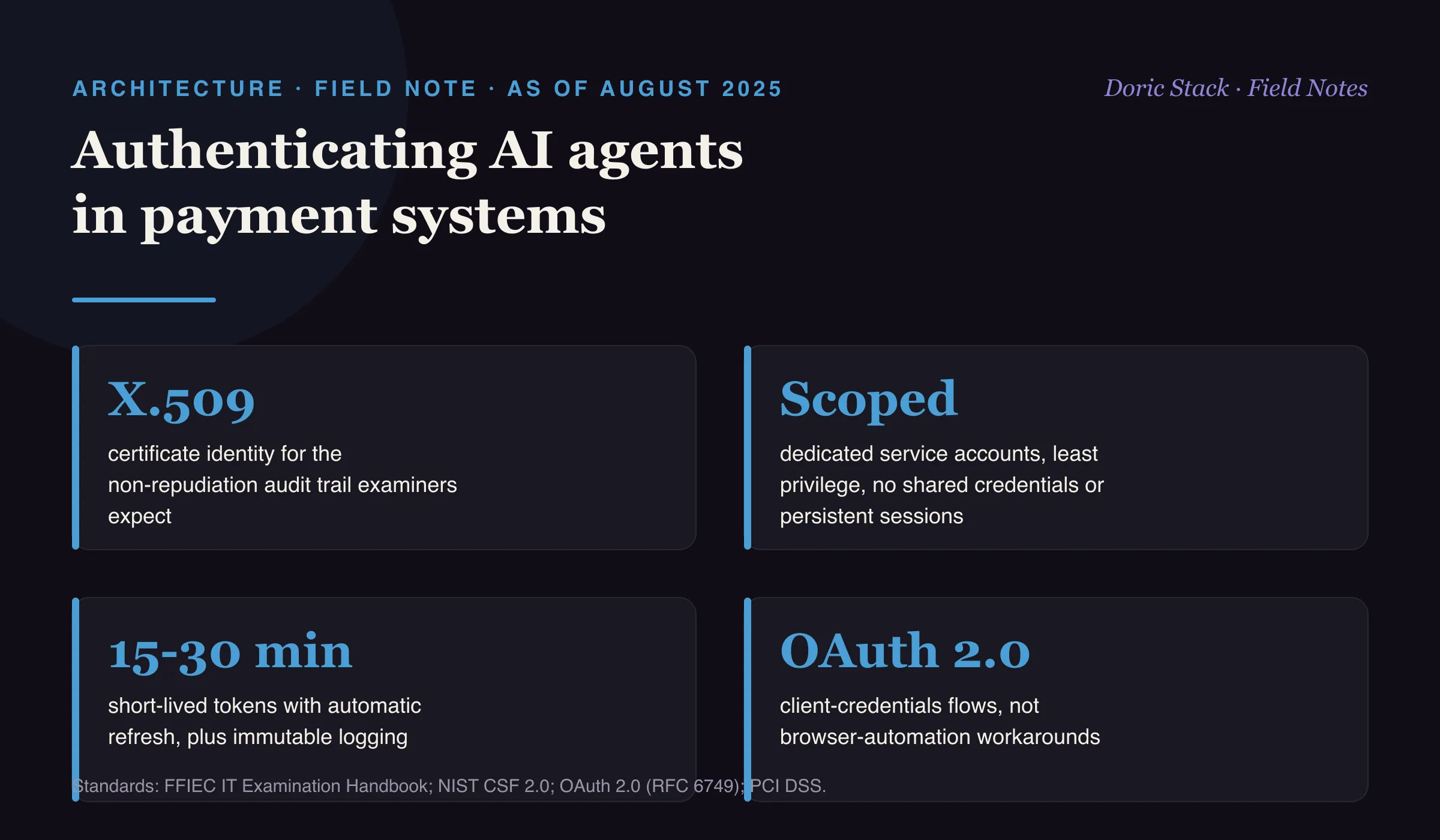
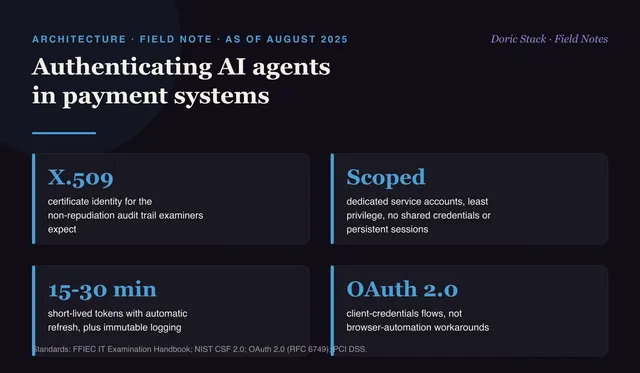
Authenticating AI agents in payment systems (as of August 2025): X.509 certificate identity for the non-repudiation audit trail examiners expect; dedicated, scoped service accounts with least privilege and no shared credentials or persistent sessions; short-lived 15 to 30 minute tokens with automatic refresh and immutable logging; and OAuth 2.0 client-credentials flows rather than browser-automation workarounds.
Give the agent a real identity, scope what it can touch, and expire its tokens fast. That is the difference between a demo and an auditable system.

Was this useful?

Choose once.

Related Posts

View All Posts »
The broker pattern is older than the agentic-commerce headline

The broker pattern is older than the agentic-commerce headline

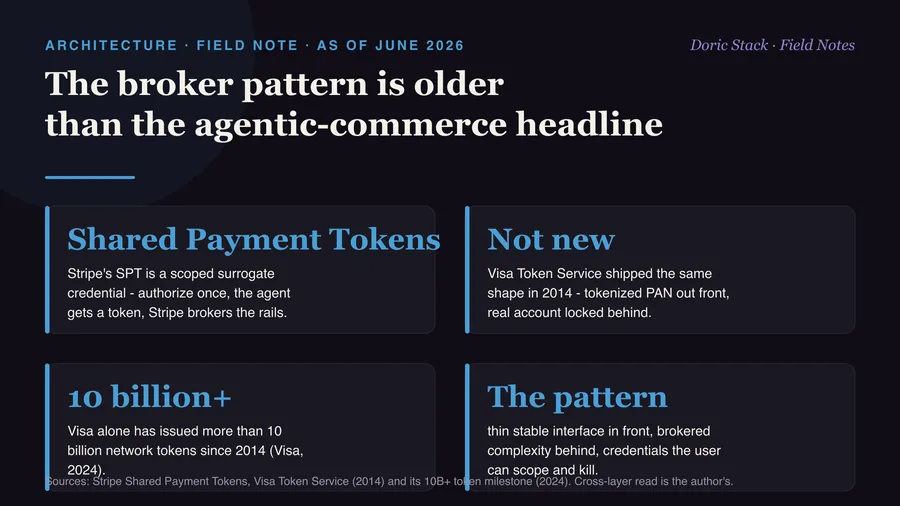
Stripe Shared Payment Tokens are the agentic-commerce headline, but anyone who ran a card tokenization rollout in 2014 recognizes the shape in five seconds. A scoped surrogate credential with a thin stable interface in front and brokered complexity behind is not new. Visa Token Service shipped it twelve years ago, and the architects who see the pattern early build the right systems instead of rebuilding every eighteen months.

Tokenized money is a 2025 architecture problem, not a 2030 one

Tokenized money is a 2025 architecture problem, not a 2030 one

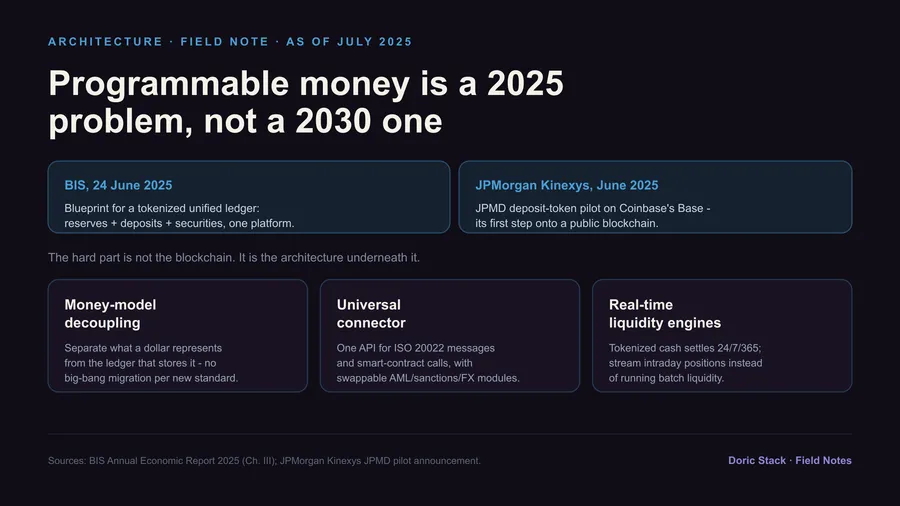
The BIS just blueprinted a tokenized unified ledger and JPMorgan put a deposit token on a public chain - in the same week. The hard part for banks was never the blockchain. It is retrofitting core banking to carry programmable money without a big-bang migration.

Cross-platform integration: the patterns that actually hold

Cross-platform integration: the patterns that actually hold

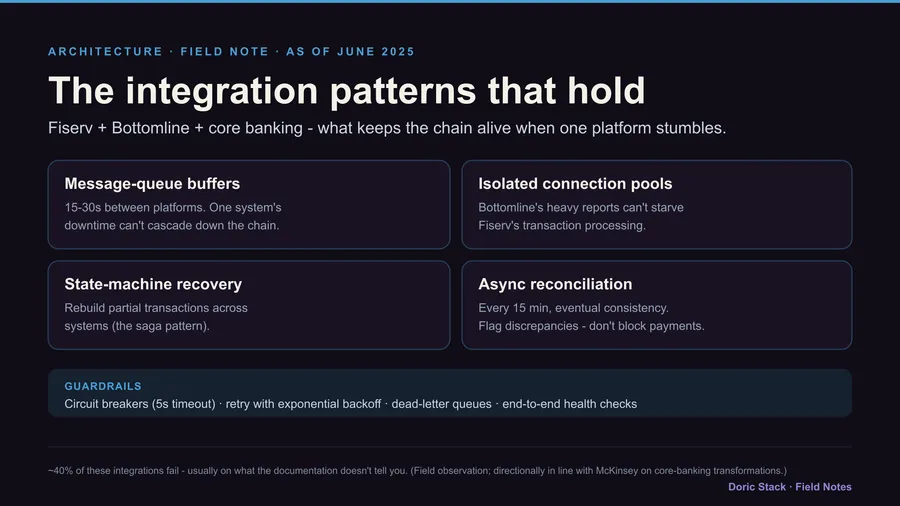
Fiserv, Bottomline, and a core banking system each work fine alone. Wiring them into one payment chain is where projects go to die - and the difference between the ones that survive and the ones that become expensive lessons is a handful of boring resilience patterns.