Field note

The operating model kills payment modernization, not the tech

A bank buys a modern payment platform and keeps the 2019 team structure, the same escalation matrix, the same three-person on-call rotation. The platform ships daily. The governance model says 90 days. Most modernization failures are operating-model failures, and the org chart defeats the architecture every time.

Mar 2, 2026 · Navin Agrawal · Strategy · 2 min read

The operating model kills payment modernization, not the tech

Visual brief

Visual brief

The operating model kills payment modernization, not the tech

As of March 2026

The bank spent millions on a new payment platform and kept the same team structure, the same escalation matrix, the same three-person on-call rotation from 2019. The platform was modern. The operating model was legacy.

Most payment modernization failures are not technology failures. They are operating-model failures, and the gap shows up the first time real-time money meets a batch-era process.

Revenue lift captured

31%

the share of expected revenue lift companies actually capture from digital and AI transformations (McKinsey).

Cost savings captured

25%

of expected cost savings - most of the value gap lives in the operating model, not the technology.

Start early

6 months

the banks that win redesign the operating model before go-live, not as a follow-on workstream.

Where the mismatch shows

You deploy real-time rails but run operations in batch-era shifts, so FedNow settles in seconds while exceptions queue until Monday because nobody staffed the weekend. You build multi-rail routing but keep knowledge in single-person silos, and “only Dave knows wires” holds right up until Dave takes leave during a Fed deadline. You ship micro-services on continuous deployment, then gate every change behind quarterly cycles and six-week freezes.

What the winners do differently

They treat operating-model redesign as a prerequisite, not a follow-on workstream. They start roughly six months before go-live. They rebuild teams around rail-specific pods instead of one monolithic support queue, and they design escalation paths that match settlement speed rather than batch-era SLAs. The platform changing is the easy half. The operating model changing is the half that actually decides the outcome.
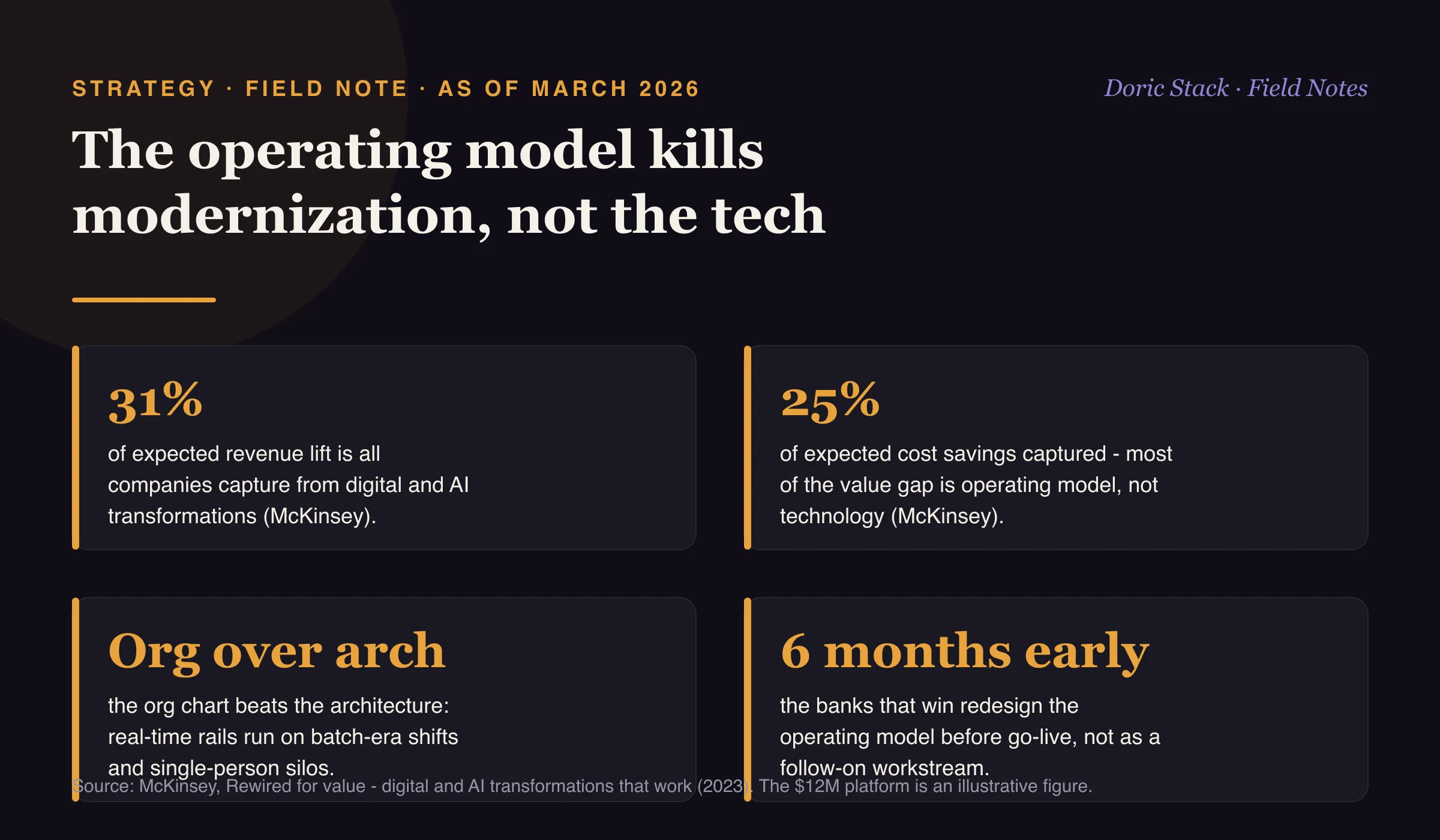
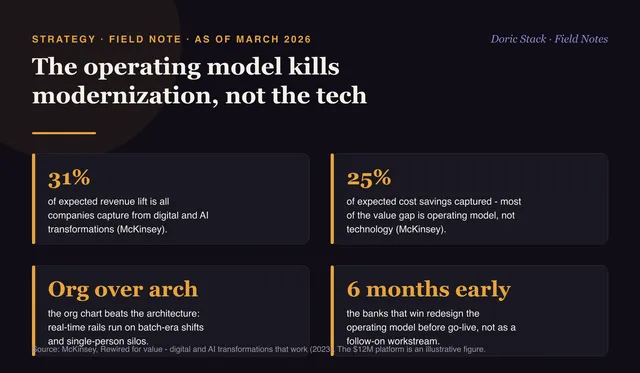
The operating model kills payment modernization, not the tech (as of March 2026): McKinsey found companies capture only 31 percent of expected revenue lift and 25 percent of expected cost savings from digital and AI transformations, so most of the value gap lives in the operating model rather than the technology; the org chart beats the architecture when real-time rails run on batch-era shifts and single-person silos; and the banks that win redesign the operating model about six months before go-live, not as a follow-on workstream.
A modern platform on a legacy operating model delivers old results at new prices. The org chart beats the architecture.
The hardest conversation in payment modernization is not technology selection. It is telling a room of people who have run operations well for a decade that their operating model has to change as much as the platform does.
Was this useful?

Choose once.

Related Posts

View All Posts »
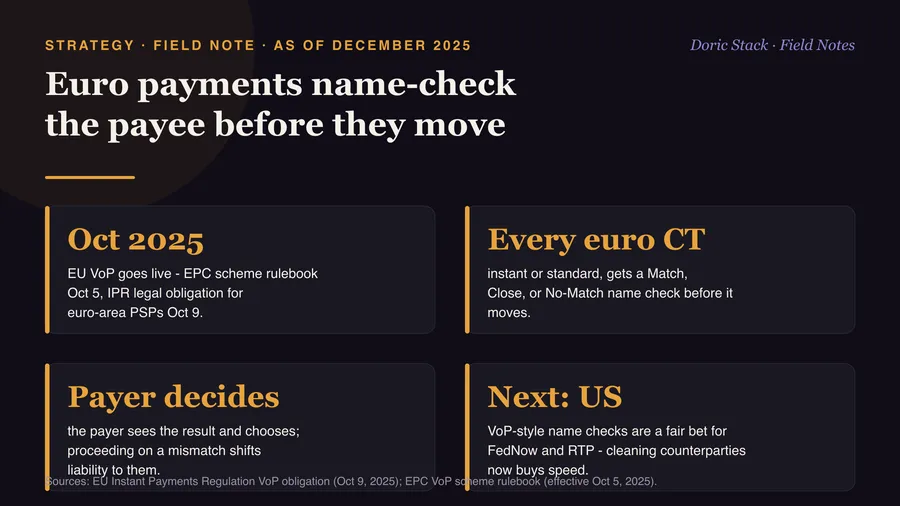
Euro payments now name-check the payee before they move

Euro payments now name-check the payee before they move

Since October 2025, euro credit transfers run a Verification of Payee check before they settle, and a name-IBAN mismatch triggers an alert. It hits US treasuries paying EUR vendors and payroll as hard as it hits EU banks, and the same name checks are a fair bet to reach FedNow and RTP next.

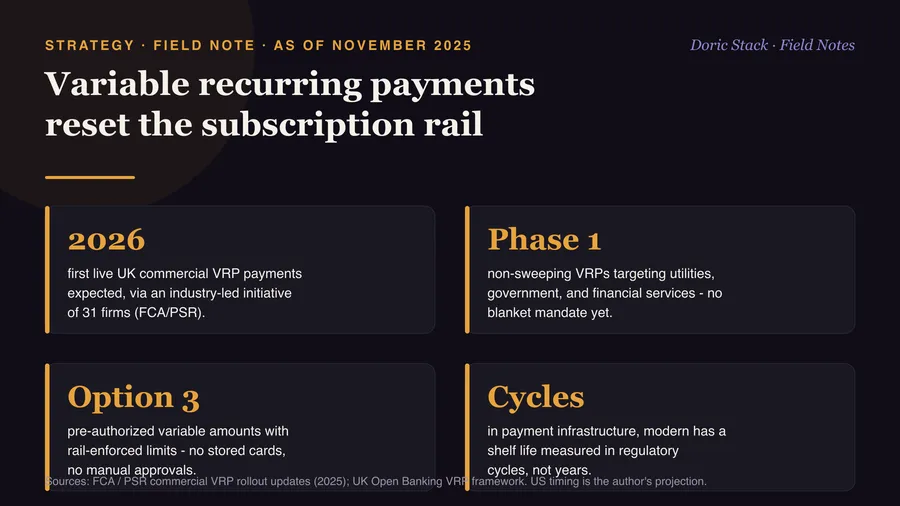
Variable recurring payments reset the subscription rail

Variable recurring payments reset the subscription rail

Subscription billing has two bad options today - store the card or chase a manual approval every cycle. Variable recurring payments add a third: pre-authorized variable amounts with limits enforced by the rail. The UK is building it now, and the lesson for everyone else is about regulatory cycles, not technology.

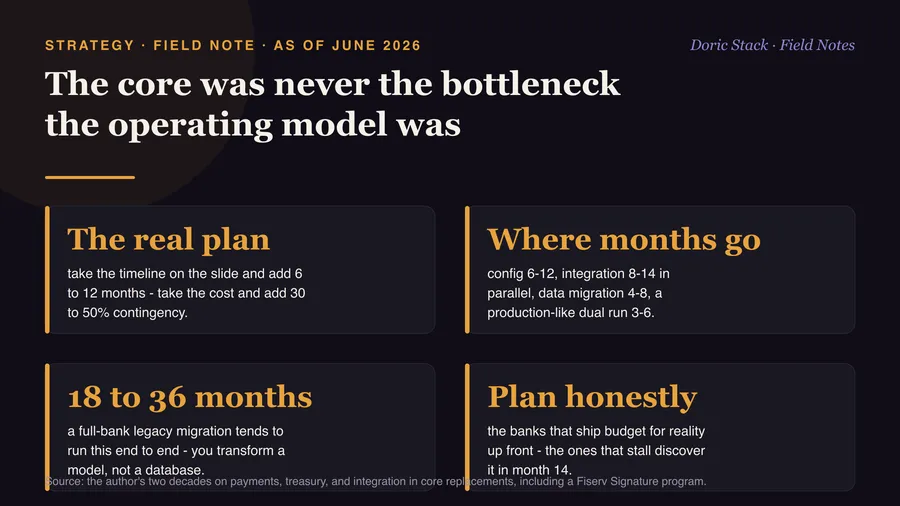
The core was never the bottleneck. The operating model was

The core was never the bottleneck. The operating model was

The plan said twelve months and the core replacement landed in year three. Nobody in that room was lying. They budgeted for a software install and got an operating-model change. After two decades on the payments, treasury, and integration side of these programs, here is the math I give clients before they sign a full legacy core replacement, and where the months actually go.

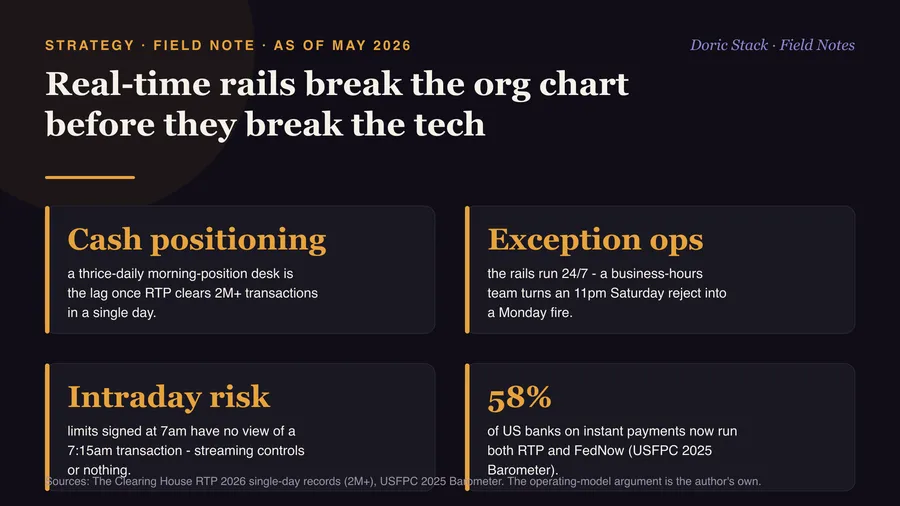
Real-time payments break your treasury org chart before they break your tech

Real-time payments break your treasury org chart before they break your tech

Your real-time rails settle in fifteen seconds. Your treasury org chart was built around an end-of-day cutoff. The gap between them is where the next reconciliation loss lives, and it shows up in three roles - cash positioning, exception ops, and intraday risk - long before it shows up in the tech stack.